

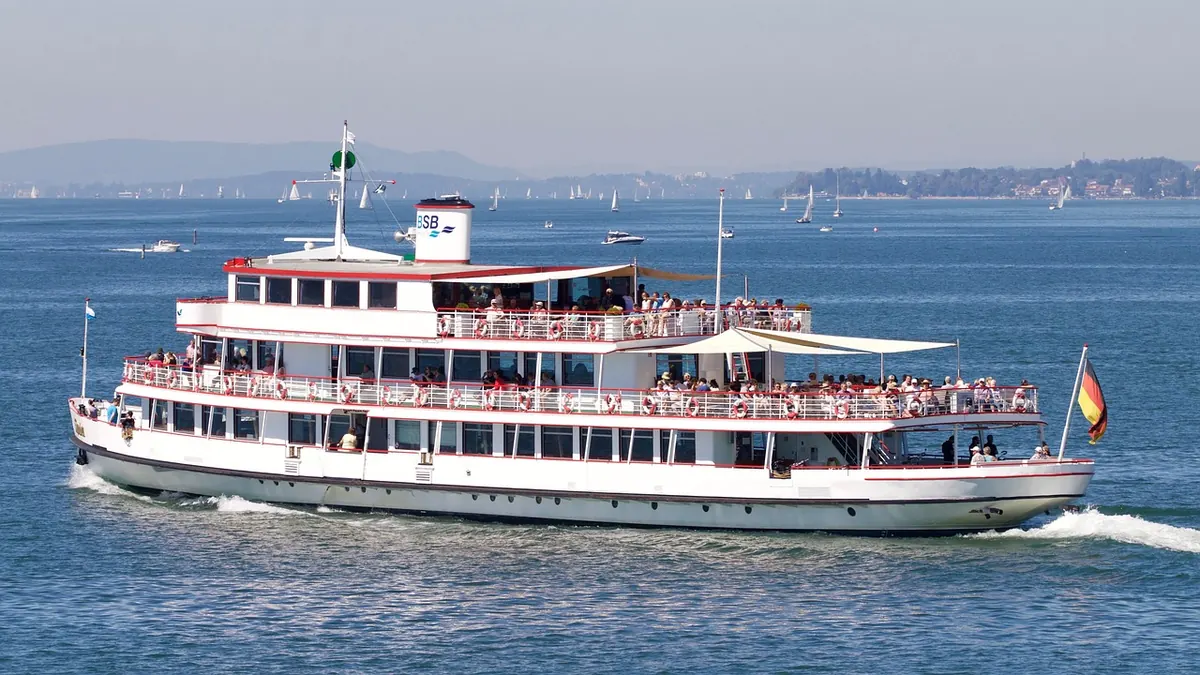
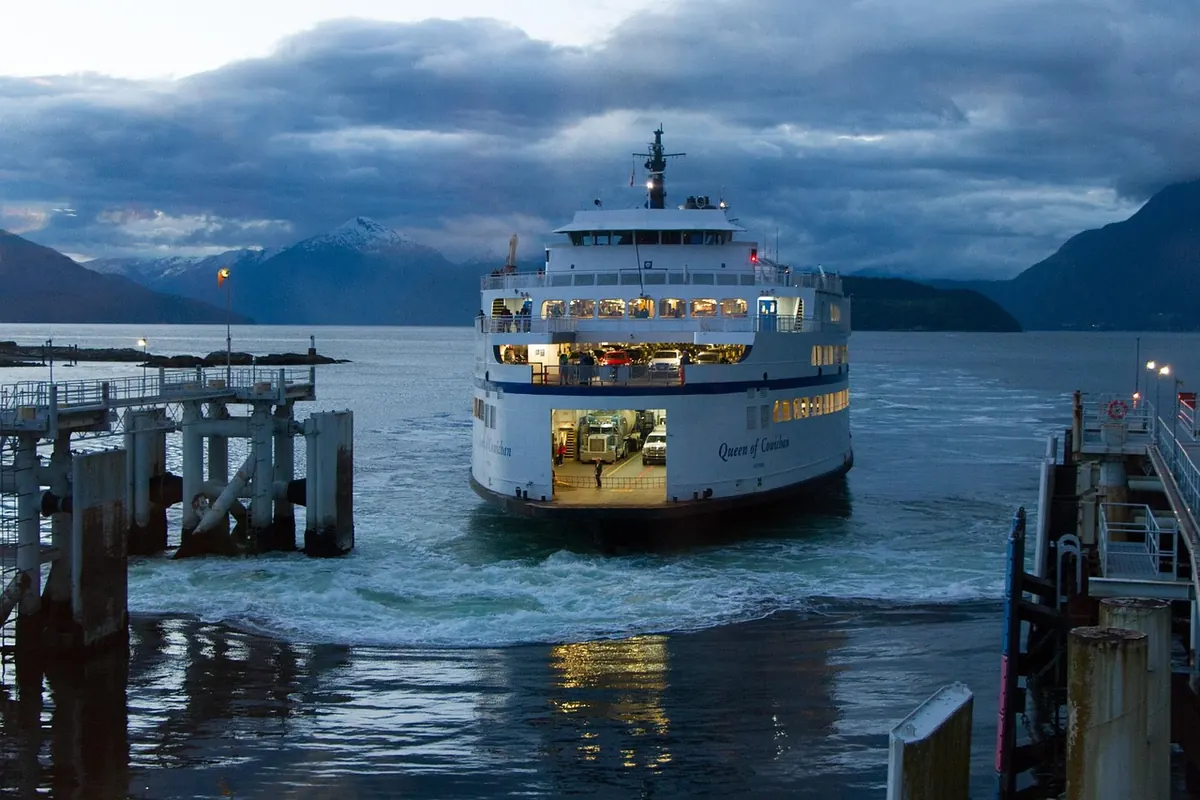
Two crossings, two very different journeys. Newhaven–Dieppe is a brisk hop from a small Sussex port that drops you straight into a Normandy town. Portsmouth–Le Havre is a longer sail from a proper ferry hub, with cabins, restaurants and a landing point that suits anyone heading further into France.
They are rarely interchangeable. The right one depends on where you live in the UK, how far you are driving once you land, whether you want a cabin, and whether you are travelling with a car or on foot.
The short answer
- Newhaven–Dieppe wins on crossing time, fares and simplicity. Best for short breaks, foot passengers, and drivers heading to Rouen, Paris or the Normandy coast.
- Portsmouth–Le Havre wins on flexibility and comfort. Best if you want an overnight sailing with a cabin, more choice of departure times, or you are pushing on to Brittany, the Loire or further south.
Crossing time and what the sailing feels like
Newhaven–Dieppe takes roughly four hours on a conventional ship. It is almost entirely a daytime operation, so you book a seat rather than a bed, eat a meal, read a book and arrive. The approach into Dieppe is genuinely worth being on deck for: chalk cliffs, then the town quay a few minutes' walk from the centre. There is no overnight option and only a handful of sailings each day, so your day is shaped around the timetable.
Portsmouth–Le Havre runs about five and a half hours in daylight, with the option of an overnight sailing that takes considerably longer but lets you sleep through it. That overnight is the whole point for many travellers: board in the evening, eat, sleep in a cabin, and drive off in France the next morning already rested. Daytime crossings are comfortable but eat a chunk out of your first day.
Either way, timetables shift with the season. Check the current schedule before you build a tight onward connection around it.
What drives the fare
Both routes price by vehicle, number of passengers, season and time of day, so comparisons are only fair like for like. As a rule, Newhaven–Dieppe is the cheaper crossing, partly because it is shorter and partly because almost nobody needs a cabin. Portsmouth–Le Havre tends to cost more, especially overnight with a cabin and a meal included.
The trap is comparing crossings rather than trips. If you are heading to the Loire, a cheaper Dieppe ticket buys you several extra hours of driving, fuel and possibly a hotel night. Landing at Le Havre can cost more at the till and less overall. Work out the door-to-door cost before you decide. Midweek sailings and off-peak dates are usually cheaper on both routes, and summer weekends book up months ahead.
Getting to the ports
Newhaven sits on the Sussex coast, a short drive from Brighton and roughly two hours from London via the A23 and A27. The port is close to the town's two stations, with Newhaven Harbour the nearer; both connect through Lewes to Brighton and to London Victoria. If you are coming by train with luggage, that walking distance matters.
Portsmouth's continental ferry port is on the eastern side of Portsea Island, reached easily from the M27 and the A3 — straightforward if you live in Hampshire, Surrey or the west of London. From Portsmouth Harbour station, plan on a short taxi ride rather than a walk with bags. One advantage of Portsmouth is depth of choice: if your plans shift, there are other French routes from the same port, including Caen, Cherbourg and St Malo, plus sailings to northern Spain.
Onward travel in France
From Dieppe, you step off almost in the town itself, which makes it an easy arrival on foot. The station has trains to Rouen with connections on to Paris Saint-Lazare. By car, the A28 heads south towards Rouen and the A13 towards Paris, with Le Havre to the west and the Normandy beaches within an hour or so. Tolls apply on the main motorways.
From Le Havre, the ferry terminal sits a few kilometres east of the centre, so a bus or taxi is the sensible way into town. The station also runs trains to Rouen and Paris Saint-Lazare. By car you are straight onto the A13 for Paris, across the Pont de Normandie towards Caen and Honfleur in around half an hour, and within reach of Brittany and the Loire in an afternoon.
Foot passengers are accepted on both routes, but not necessarily on every sailing, and public transport at either end needs planning — particularly at Le Havre, where the terminal is not a stroll from the station.
Which route suits whom
Choose Newhaven–Dieppe if
- You live in Sussex, Kent, south London or the south-east.
- You want the cheapest sensible crossing and do not need a cabin.
- You are going to Rouen, Paris, Giverny or the eastern Normandy coast.
- You are travelling on foot or by bicycle and want a short, simple crossing.
Choose Portsmouth–Le Havre if
- You live in Hampshire, Dorset, Wiltshire or the west of England.
- You would rather sleep on the boat than pay for a hotel.
- You are driving to Brittany, the Loire, the Vendée or beyond.
- You want more departure times and a wider choice of French ports.
Practical tips before you book
- Cost the whole journey, including fuel, French tolls and any extra night's accommodation.
- Check in early. Vehicle check-in usually closes well before departure, and it is longer than most people expect.
- Book summer weekends and school holidays well in advance; travel midweek if your dates allow.
- Only pay for a cabin if you are sailing overnight. On a four-hour day crossing it is money wasted.
- If you are connecting to a train, flight or long drive, leave generous slack — weather and port delays happen.
- Read the amendment terms. Plans change, and the cost of moving a booking varies a lot between fares.
Fares, timetables and port arrangements change with the season, so confirm the details with the operator before committing. Whichever route you pick, the difference between a good crossing and a frustrating one usually comes down to planning the day around the sailing, not the other way round.
Photo: 652234 / Pixabay